Asia Polymer Supply Disruption 2026: Korea, Thailand, Taiwan All Offline
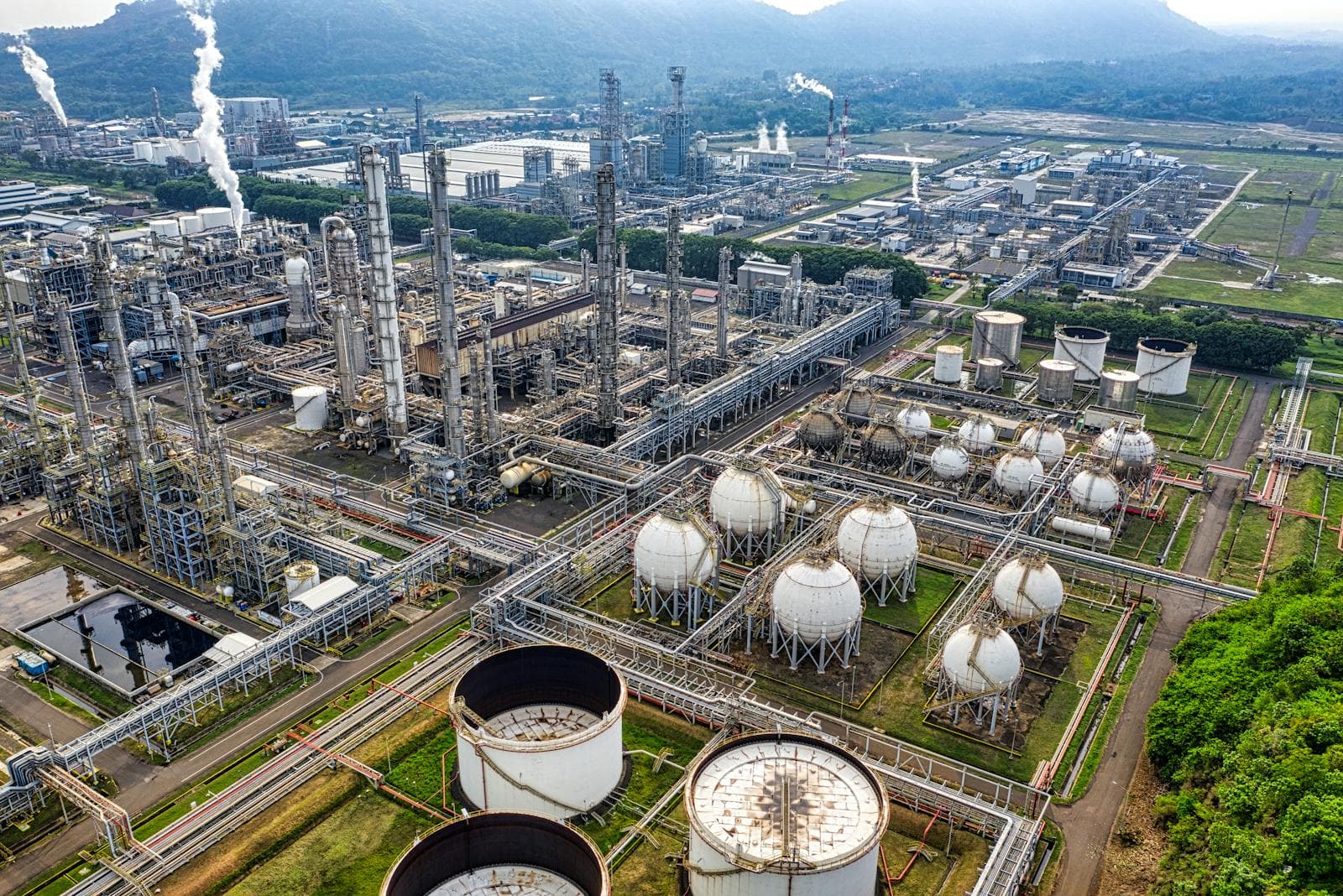
Rayong Olefins runs on naphtha and propane from the Gulf. In mid-March, it stopped running. It is not alone.
The Strait of Hormuz has been functionally closed to standard commercial traffic since late February. Every major naphtha-based producer in Asia sources feedstock through that corridor. The ones that stopped receiving it have started stopping production — in sequence, by feedstock exposure, across Korea, Thailand, Taiwan, and Vietnam. What follows is where things actually stand, and what it means for buyers heading into Q2.
Where Supply Stands
Offline or force majeure:
- Lotte Chemical Yeosu (Korea) — 1.23M t/yr ethylene — halted March 27. Maintenance window ends May 29. Restart at that point depends on feedstock conditions.
- YNCC (Korea) — ~1.9M t/yr ethylene (crackers No. 1 and No. 2) — force majeure declared.
- LG Chem Yeosu (Korea) — No. 2 cracker (800,000 t/yr) shut down March 23. No. 1 cracker (1.2M t/yr) remains operational.
- Rayong Olefins / SCG Chemicals (Thailand) — 800,000 t/yr ethylene — offline since mid-March. No restart date.
- Formosa FPCC (Taiwan) — crackers No. 2 and No. 3 (1.335M t/yr combined) running at ~70%, cutting further in April; No. 1 cracker not operational. Force majeure declared on shipments.
- Long Son Petrochemicals (Vietnam) — ~950,000 t/yr ethylene — shutdown extended through June.
- CSPC / Shell-CNOOC JV (China, Huizhou) — 1.2M t/yr naphtha cracker — supplies suspended from March 5. (Source: Reuters)
Not all producers are equally affected. Asia's polymer supply chain runs on two distinct feedstock routes. The one being disrupted uses naphtha from the Middle East, cracked at coastal facilities across Asia. The other is China's coal-to-olefins (CTO) sector — the world's only commercially meaningful production base of its kind — which converts domestic coal from China's interior into polymer feedstock with no Hormuz exposure. CTO producers have maintained uninterrupted production, though their FOB costs carry an inland freight premium from rail transport to coastal export ports. Some Middle East producers shipping through non-Hormuz routes also remain available. The supply picture is fragmented, not binary.
What This Means for Your Q2
The picture looks different depending on where your supply relationships sit.
If you have a confirmed Korean restart relationship: Lotte Yeosu's maintenance window ends May 29 — eight weeks from now. The company moved maintenance forward by three weeks to avoid carrying fixed costs on an idle plant; the schedule is documented and the logic is sound. Restart at that point is contingent on feedstock conditions, not guaranteed. The question is whether your current inventory covers that window, and whether bridging at today's prices makes more sense than drawing stock down and waiting.
If you sourced from Thailand or Taiwan: these timelines are less certain. Rayong has no restart date. Formosa's force majeure has no confirmed end. Open market exposure here is meaningfully higher than the Korean situation.
If you are in the open market without a confirmed restart relationship: the available pool has narrowed materially. The decision is about asymmetric risk — what does being undersupplied in Q2 cost your business, against what you pay by securing supply at today's prices. One cost is known. The other is uncertain but potentially higher.
One timing factor cuts across all three situations. Trump has set April 6 as a deadline for Iran to reopen the Strait — with threatened strikes on Iranian energy infrastructure if unmet. Iran has rejected the current ceasefire framework. Whatever happens on that date, none of the restart timelines above will change. If a ceasefire holds, some of today's price premium may unwind. If talks fail, prices will likely move higher. Either way, the Q2 supply gap is set by restart dates, not by the diplomacy.
The Numbers
- LLDPE C4 (Film, China-origin): $1,290–$1,300/mt CFR SE Asia — up $30/mt in the March 30 session, first directional move since the post-spike correction on March 25.
- PP Homo — Yarn (T03, T30, 550J, China-origin): $1,270–$1,280/mt CFR SE Asia
- PP Homo — Injection (HP550N, HP500P, China-origin): $1,270–$1,280/mt CFR SE Asia
- PP Fiber (Y16/25, Y40, China-origin): $1,340–$1,350/mt CFR SE Asia
- PP Thin Wall (G70/75, BZ-70X, China-origin): $1,340–$1,350/mt CFR SE Asia
- Naphtha CFR East Asia: $944/mt as of March 30 (SGX Platts) — down from peak of $1,077/mt on March 17, still 52% above pre-crisis levels of approximately $620/mt.
Market Conditions
Availability: 🔴 Tightening — Korea and Thailand offline simultaneously; no confirmed restart dates before late May. Formosa Taiwan cutting further from April.
Price trajectory: 🔴 Rising — up $30/mt in the March 30 session after four consecutive flat sessions. DCE futures led; physical prices followed.
Supply window: 🔴 Narrowing — Korean cracker restarts earliest late May; Thailand has no date. Each week without resolution extends the gap.
How to read this: This is a supply-side assessment only. The right response depends on your own position — current inventory, confirmed order book, and whether you have a restart relationship with an affected supplier. These three dimensions tell you the direction of the market. What you should do depends on your own numbers.
Structural Risks
Reports indicate Iran is moving to codify the Hormuz toll into permanent law — a legal framework that would survive any ceasefire. The bill is unconfirmed. The timeline is uncertain.
But the direction matters. Most buyers reorganizing their supply chains are assuming normalization follows when the shooting stops. That assumption depends on the toll being temporary. If this legislation advances, it isn't.
A ceasefire ends the shooting. It may not end the toll.
Related
Vietnam's own domestic cracker (Long Son) was offline for much of 2024-2025 on poor naphtha economics — leaving Vietnamese converters almost entirely import-dependent on PE. The Vietnam polymer market 2026 import-gap analysis quantifies that dependency by grade (PP T30S, HDPE 5502, LLDPE 7042, PVC SG-5) and maps which Chinese origins cover each gap at what landed cost.
The Polymer Compass is free for polymer distributors and converters. Subscribe at kantormaterials.com/polymer-compass →
Free market intelligence for polymer distributors.