Premium Vietnamese calcium carbonate,
resin and filler from one supplier.
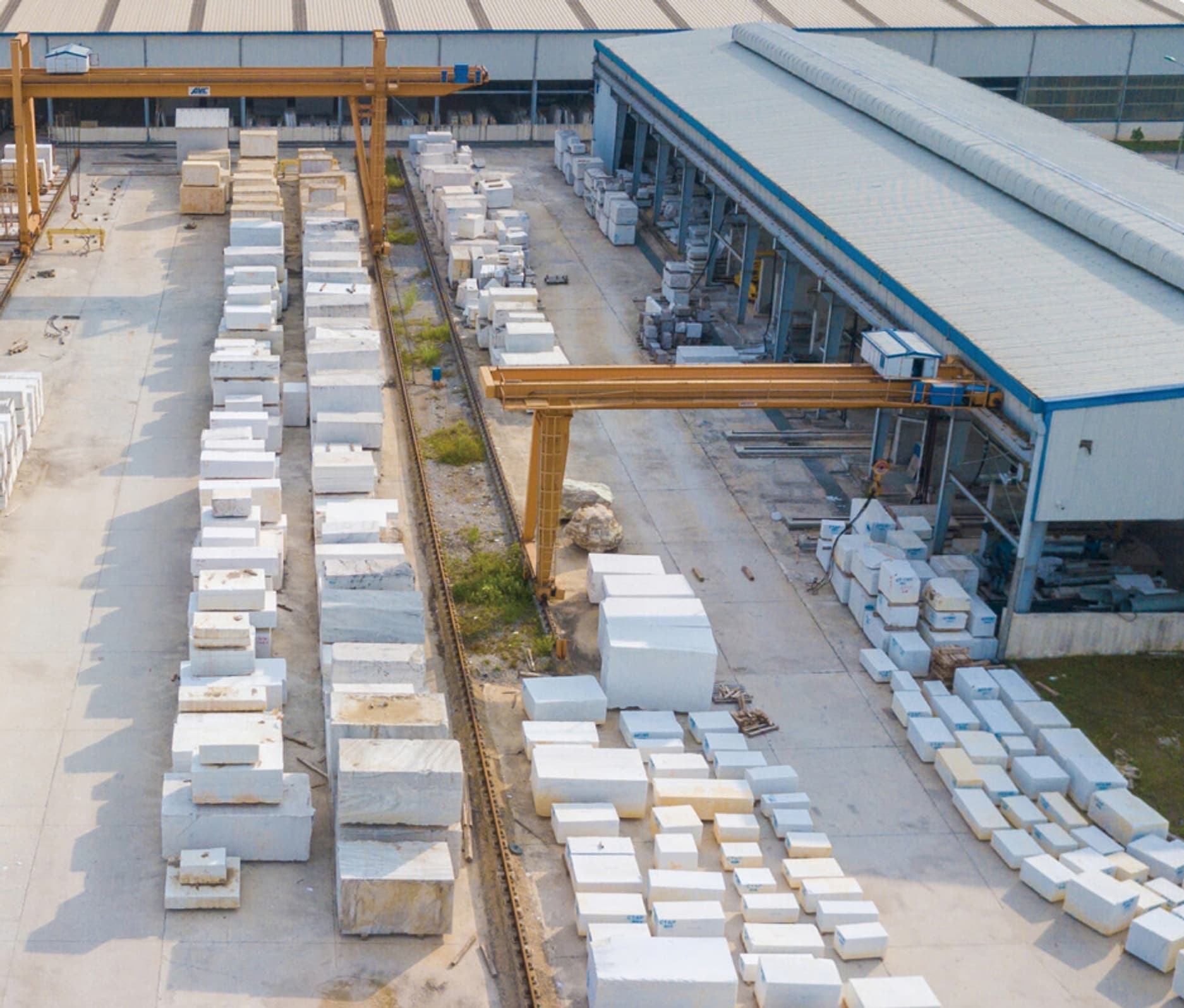
High-whiteness ground calcium carbonate (GCC) — the four-grade Kantor KC Series, coated and uncoated — for masterbatch, film, and PVC. Our flagship line: Kantor Materials produces it through a vertically integrated Vietnamese operation, with China-origin resin available from the same supplier.
Premium plastics-modification GCC.
Four engineered grades — KC-4, KC-6, KC-10, KC-17 — running from ultrafine film grade to general filler: high whiteness and fine, consistent particle size for applications where domestic mid-grade powder underperforms or pushes up TiO₂ cost. The grade is matched to your application, and the spec is confirmed per lot.
Whiteness matters most in the white-and-opaque segment (masterbatch, white film, caps, light PVC). It is not a substitute for TiO₂ — CaCO₃ extends titanium dioxide, it does not replace it. We will tell you where the grade is worth its premium and where ordinary filler is the right choice. See what the extension is worth on your line →
Resin and filler, one relationship.
A converter importing resin from China and filler from Vietnam is running two certificate-of-origin regimes, two suppliers, and two FX exposures. We handle both — China-origin resin on Form E and premium Vietnamese GCC on its preferential certificate (Form D within ASEAN, Form AI into India) — as one quotation, one set of documents, and one point of accountability.
That puts one party accountable for getting both certificate regimes right, simplifies coordination, and gives you a single point of accountability for the quality of what arrives — while either input can still be sourced on its own.
- →China-origin resin (PP, PE, PVC, engineering grades) — Form E
- →Premium Vietnamese GCC powder, coated or uncoated — Form D / Form AI
- →Filler masterbatch on demand
- →Matching grade to application, with documentation
- →Sourcing, quality, and logistics handled by one supplier
Applications.
Filler masterbatch
The most direct fit. High-whiteness fine powder for compounders making CaCO₃ masterbatch for sacks, film, and sheet.
BOPP / BOPET & blown film
Where whiteness, fine particle size, and coated dispersion matter most — thin gauges expose agglomeration and specks.
Light-colour PVC
Pipe, profile, and fittings where a high-whiteness filler protects appearance at higher loadings.
White HDPE & closures
Opaque-white bottles, caps, and closures — the segment where the whiteness premium is genuinely worth paying.
Specified, documented, repeatable.
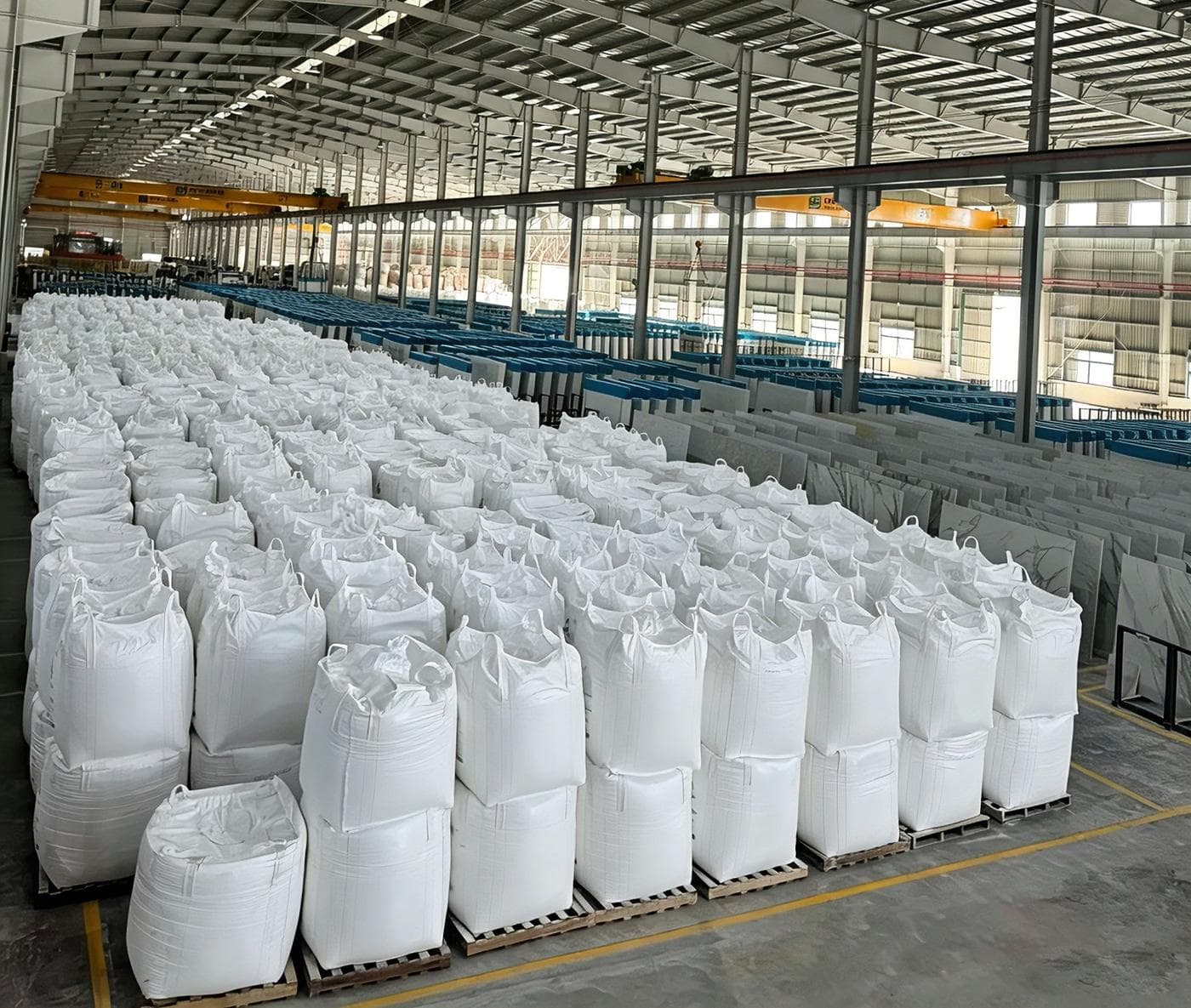
A premium filler is only worth it if the second container matches the first. The grade is specified up front, with full lot documentation available on qualification.
Technical Data Sheet
Kantor-branded TDS covering whiteness, particle size, purity, oil absorption, and coating level.
Per-lot Certificate of Analysis
Whiteness, D50, CaCO₃ content, residue, and moisture confirmed per production lot.
Certificate of Origin
Form D or Form AI for Vietnam-origin GCC, and Form E for China-origin resin — preferential duty where it applies.
Heavy-metals testing
A third-party heavy-metals panel (Pb / As / Cd / Hg) is being finalized with an accredited lab — available on request to support food-contact and premium qualification programs.
Test it on your own line before you buy.
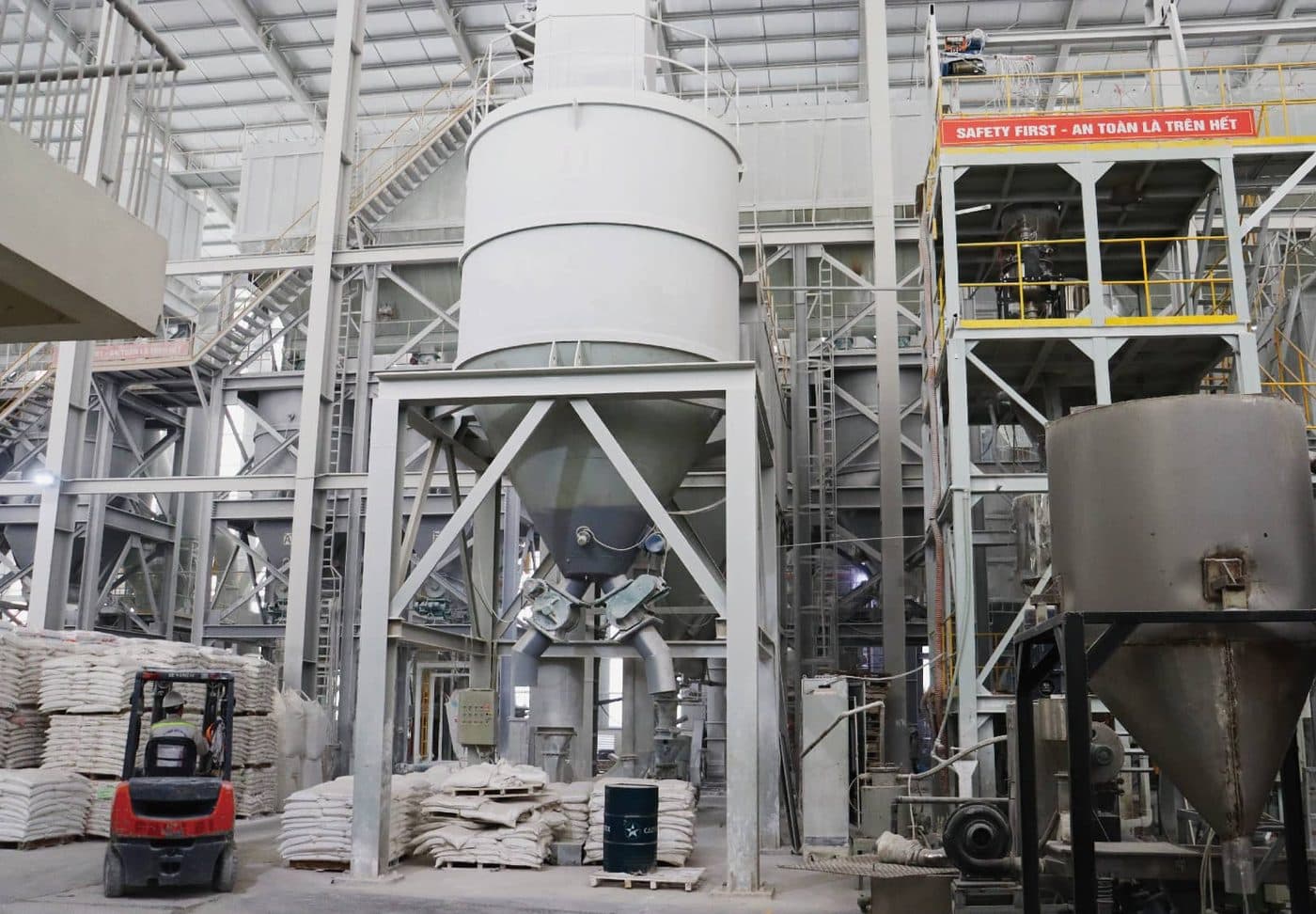
Every KC grade is available as a free sample — under 1 tonne, dispatched within 48 hours, with the TDS and a per-lot certificate of analysis. Run it on your own equipment against the grade you use today, and decide only after you see the results. Tell us your application and we will match the grade — or answer two questions in the grade selector and it is matched for you.
How ordering works.
How to choose and run the grade.
Questions buyers ask.
What is the Kantor KC Series?
The Kantor KC Series is a four-grade premium Vietnamese ground calcium carbonate (GCC) for plastics — KC-4, KC-6, KC-10, and KC-17 — running from an ultrafine film grade to a general filler. It is produced through a vertically integrated Northern Vietnam operation and supplied with a TDS, a per-lot certificate of analysis, and a Form D or Form AI certificate of origin.
What whiteness and brightness does Kantor KC Series GCC have?
Whiteness ≥98% and ISO brightness (R457 / ISO 2470) ≥95% across all four grades — above typical mid-grade filler powder. CaCO₃ purity is ≥98%, with Fe₂O₃ ≤0.05% and MgO ≤0.5%. Values are typical and confirmed per production lot on the certificate of analysis.
What is the difference between KC-4, KC-6, KC-10, and KC-17?
Particle size only. KC-4 is the finest top cut (D97 about 5.5 µm) and KC-17 the coarsest (D97 about 17 µm); D50 runs about 1.5–3.6 µm. Whiteness and chemistry are the same across the ladder — the grade is matched to your product's gauge, since defects come from the coarse tail of the particle-size distribution.
Is Kantor KC Series calcium carbonate coated or uncoated?
Both — every grade is available uncoated or with a stearic-acid coating. As a rule of thumb, the higher the loading, the thinner the product, and the finer the grade, the more a coating helps dispersion and moisture resistance; low loadings in thick parts are usually fine uncoated.
What is the minimum order, sample policy, and delivery term?
A free sample under one tonne is dispatched within 48 hours with a TDS and per-lot COA. The minimum order is one 20-foot container (24 tonnes) at the same per-tonne price as large volumes. The standard term is FOB Haiphong (CFR or CIF on request); payment is 30% by bank transfer, 70% against the bill of lading.
Which countries does Kantor supply, and how is import duty handled?
Kantor supplies compounders and converters across India, Indonesia, Thailand, and the Philippines. Raw GCC powder (HS 2836.50) ships with the preferential certificate of origin for your market — Form D under ATIGA within ASEAN, or Form AI under the ASEAN–India FTA — which secures the preferential rate (duty-free in most ASEAN markets). We confirm the exact rate for your destination and tariff line before you order.
Tell Us Your Application
Send your application, target loading, and required fineness. We will respond with a matching grade, the documentation, and advice on running a one-lot line trial.